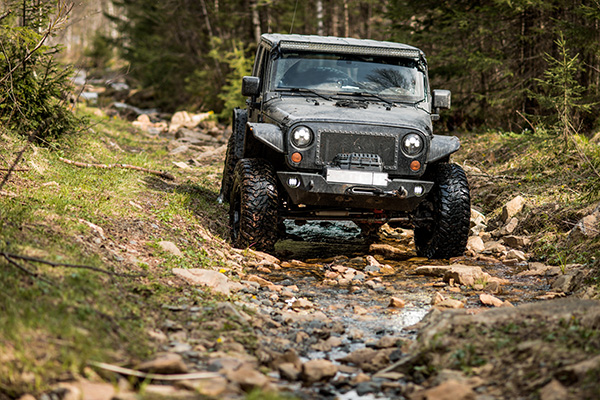
Owning a 4x4 does not automatically mean the vehicle is ready for every trail. Four-wheel drive gives you more traction, but it cannot protect weak tires, overheating components, low ground clearance, or a damaged driveline. Once you leave the pavement, small mechanical problems become much harder to manage.
A little preparation changes the entire trip. The right tires, working recovery points, correct fluid levels, and a clear understanding of the terrain can keep a fun day from turning into hours of digging, waiting, or arranging a tow from a remote area.
Understand How Your 4x4 System Works
Four-wheel-drive systems are not all the same. Some vehicles use a traditional transfer case with 2H, 4H, and 4L settings. Others rely on full-time four-wheel drive, selectable terrain modes, electronic locking systems, or all-wheel-drive controls that distribute power automatically.
Know when to use each setting before reaching loose dirt or a steep climb. Four-wheel-drive high is generally suited to loose surfaces at moderate speeds, while low range provides extra torque and control for slow climbs, rocks, deep sand, or difficult descents. Using four-wheel drive on dry pavement when the system is not designed for it can create driveline binding and place unnecessary stress on the transfer case, axles, and joints.
Check The Vehicle Before Leaving Pavement
A pre-trip inspection should cover more than whether the engine starts. Off-road travel loads the suspension, cooling system, tires, steering, axles, and drivetrain in ways normal commuting does not.
- Check all four tires for cuts, cracking, low tread, sidewall damage, and correct pressure. Do not forget the spare tire, which may have been sitting untouched for years.
- Inspect the engine oil, coolant, transmission fluid, transfer case fluid, and differential fluid for low levels or signs of leakage.
- Look under the vehicle for loose shields, damaged skid plates, hanging wires, leaking shocks, torn axle boots, and fresh fluid around the differentials.
- Test the battery and confirm the terminals are tight. Repeated slow-speed driving and accessory use can place extra demand on the charging system.
- Check the brakes, steering, wheel bearings, and suspension for looseness or noise before rough terrain makes an existing problem worse.
Regular maintenance is especially important when a 4x4 spends time in dusty, muddy, or wet conditions and on uneven terrain. A vehicle that feels acceptable around town may reveal its weaknesses quickly on a trail.
Tires Have More Influence Than The 4x4 Badge
Four-wheel drive helps send power to more wheels, but the tires still create the grip. Highway tires may work well in daily traffic yet struggle in mud, loose sand, wet rocks, or deep ruts. Tread design, rubber condition, tire size, and sidewall strength all influence how the vehicle performs.
Lowering tire pressure can improve traction on some surfaces by creating a larger contact patch, but it should be done carefully. Going too low can damage the sidewall, unseat the bead, or allow the wheel to strike rocks. Carry an accurate pressure gauge and a portable air compressor so the tires can be returned to normal pressure before driving at road speed.
Ground Clearance Does Not Tell The Whole Story
A vehicle may have enough clearance in the center but still have low points near the front bumper, rear bumper, differential housing, exhaust, or suspension mounts. Approach angle, departure angle, and breakover angle describe how well the vehicle can enter, leave, and cross obstacles without scraping.
Walk unfamiliar obstacles before driving over them. Deep ruts can catch differentials, sharp ridges can contact the center of the vehicle, and hidden rocks can damage steering or drivetrain parts. A spotter outside the vehicle can see tire position and underbody clearance far better than the driver can from behind the wheel.
Bring Recovery Equipment You Know How To Use
Recovery equipment is only helpful when it fits the vehicle, and everyone understands how to use it safely. Improvised straps, weak attachment points, or poor recovery angles can damage the vehicle and injure people nearby.
- Carry a rated recovery strap or kinetic rope suited to the vehicle’s weight, along with compatible soft shackles or rated bow shackles.
- Use proper frame-mounted recovery points. Tie-down loops, suspension arms, bumpers, and trailer balls are not automatically safe recovery locations.
- Pack a shovel, traction boards, gloves, tire repair kit, portable compressor, basic tools, flashlight, and first-aid supplies.
- Bring enough water, food, sun protection, and warm clothing for a longer delay than expected.
- Keep a charged phone, offline map, and another form of communication when traveling beyond reliable cell coverage.
Never stand in line with a recovery rope under tension. Keep bystanders well away, communicate clearly, and stop if any attachment point begins to bend or shift.
Water And Mud Can Damage More Than The Exterior
A muddy vehicle can be washed, but water inside the drivetrain is a larger concern. Deep crossings can allow water into axle housings, differentials, the transmission, transfer case, wheel bearings, or electrical connectors. The air intake is another serious risk because an engine can be damaged if it pulls in water.
Do not enter water when you cannot judge the depth, current, bottom condition, or exit route. Check the vehicle manufacturer’s recommended wading depth, and remember that modified tire size or suspension height does not automatically protect low-mounted breathers or electronics. After deep mud or water, fluid condition and underbody components should be checked.
Drive With Control Instead Of Momentum
Speed can help in certain sand or mud conditions, but relying on momentum to overcome every obstacle is hard on the vehicle. Sudden throttle can break traction, bounce the suspension, overload axle shafts, and turn a small steering correction into a larger problem.
Use steady throttle, keep the wheels as straight as the terrain allows, and let low-range gearing do the work on difficult sections. If the tires begin spinning without forward movement, stop and reassess. Continued wheelspin digs deeper holes, overheats the transmission, and increases the chance of driveline damage.
Get 4x4 And Drivetrain Service In Riverside, CA, With Premier West Gears
Before heading off-road, Premier West Gears in Riverside, CA, can inspect your differentials, axles, transfer case, gears, bearings, driveline, and related components. A prepared 4x4 gives you a better chance of enjoying the trail and driving home without an unexpected repair.
Contact us to schedule an appointment.