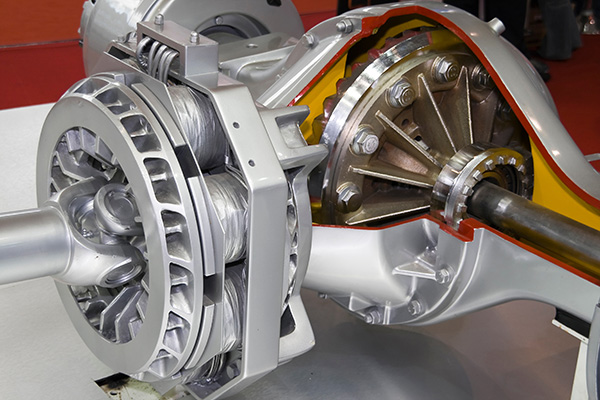
A differential is one of those parts most drivers never think about until something feels wrong. The vehicle may start humming on the highway, clunking during turns, vibrating under acceleration, or wearing tires in a strange pattern. At first, it may not seem connected to one single component.
The differential plays a major role in how power reaches the wheels. It also affects how the vehicle turns, how the tires grip, and how the drivetrain handles stress. When it starts wearing or losing fluid, symptoms can appear as if it's a tire, suspension, transmission, or alignment problem.
What A Car Differential Does
A differential helps send engine power to the drive wheels while allowing those wheels to rotate at different speeds. That speed difference is important every time you turn. The outside wheel travels farther than the inside wheel, so it needs to rotate faster.
Without a working differential, the tires would scrub, hop, or bind during turns. The vehicle would feel harsh and difficult to control. In normal driving, the differential makes turning feel natural while still transferring power to the road.
Front, Rear, And All-Wheel Drive Differentials
The type of differential your vehicle has depends on its drivetrain. Front-wheel-drive vehicles use a differential built into the transaxle. Rear-wheel-drive vehicles usually have a rear differential. Four-wheel-drive and all-wheel-drive vehicles can have front and rear differentials, plus a transfer case or center differential, depending on design.
That is why differential symptoms can vary. A rear differential whine may sound like it is coming from the back of the vehicle. A front differential issue may feel closer to the steering or front axle area. AWD and 4x4 systems add more parts, which makes proper testing even more important.
How Differentials Affect Traction
The differential helps control how torque is transmitted to the wheels. In a standard open differential, power can take the path of least resistance, which means a slipping wheel can receive more spin than grip in some situations. Limited-slip and locking differentials are designed to improve traction by helping distribute power more effectively.
When differential parts wear, traction can change. The vehicle may feel less controlled on wet roads, loose gravel, snow, or during acceleration out of turns. On trucks and performance vehicles, differential condition can have a big effect on how confidently the vehicle puts power down.
How Differential Problems Change Handling
A worn or damaged differential can make a vehicle feel strange during turns or acceleration. You may notice clunking, binding, chatter, vibration, or a delayed feeling when power is applied. Some drivers describe it as the vehicle feeling tight or unsettled from underneath.
Concerns are not always caused solely by the differential. Tires, suspension parts, wheel bearings, axles, driveshafts, and transmission mounts can create similar symptoms. That is why a careful inspection matters. The goal is to determine whether the issue is within the differential or elsewhere in the drivetrain.
Differential Wear And Tire Damage
Differential problems can affect tire wear, especially when the vehicle is binding, slipping, or putting uneven stress through the drivetrain. If wheels are not rotating cleanly through turns, the tires can scrub against the road. That can lead to faster wear and strange tread patterns.
Tire mismatch can also hurt the differential. Different tire sizes, uneven tread depths, or mismatched tires on AWD and 4x4 vehicles can force drivetrain parts to work harder. Over time, that added stress can contribute to wear in the differential, transfer case, or axles. Regular maintenance should include tire checks along with drivetrain fluid checks.
Common Signs Of Differential Trouble
Differential symptoms can be easy to confuse with other problems, but certain signs deserve attention.
- Whining or humming that changes with speed
- Clunking when shifting from drive to reverse
- Vibration during acceleration
- Grinding or rumbling from the axle area
- Gear oil smell or visible fluid leaks
- Binding or chatter during turns
- Uneven tire wear with drivetrain symptoms
These signs do not automatically prove the differential has failed, but they do mean the drivetrain needs testing. Gear noise, leaks, and vibration tend to get worse when ignored.
Why Differential Fluid Service Is Important
Differential fluid protects gears, bearings, clutches, and seals from heat and metal wear. Over time, that fluid can break down, collect metal particles, or leak out through worn seals. Low or dirty fluid can allow internal parts to run hotter and wear faster.
Some differentials also require specific fluid additives, especially limited-slip designs. Using the wrong fluid can cause chatter, poor operation, or added wear. Differential fluid service isn't something drivers often think about, but it can help prevent expensive gear and bearing damage.
Why Differential Diagnosis Should Be Precise
Differentials are built with tight gear patterns and careful clearances. If gear wear, bearing wear, backlash problems, or seal leaks are involved, the repair needs to be handled correctly. Replacing fluid may help if service is overdue, but it will not fix damaged gears or worn bearings.
A proper check may include a road test, fluid inspection, leak check, tire measurement, axle inspection, driveshaft review, and listening for where the noise changes. Since differential and transmission symptoms can overlap, careful testing helps avoid the wrong repair path.
Get Differential Repair In Riverside, CA, With Premier West Gears
If your vehicle has differential noise, gear oil leaks, vibration, traction changes, handling concerns, or unusual tire wear, Premier West Gears in Riverside, CA, can inspect the differential and drivetrain to find the cause.
For differential service, transmission-related concerns, and drivetrain repair, contact us to schedule an appointment.